Operators running several RAN, Core and Transport vendors juggle disconnected tools. A unified OSS view turns that complexity into clarity.
Most operators don't run a single-vendor network. Years of upgrades, acquisitions and technology refreshes leave RAN, Core and Transport domains spread across several OEMs — each with its own element manager, KPI definitions and alarm formats.
The cost of fragmented tools
When every vendor speaks a different language, engineers spend more time collecting and normalizing data than acting on it. Cross-domain issues slip through the gaps, and leadership struggles to get a consistent picture of network health.
What a unified view changes
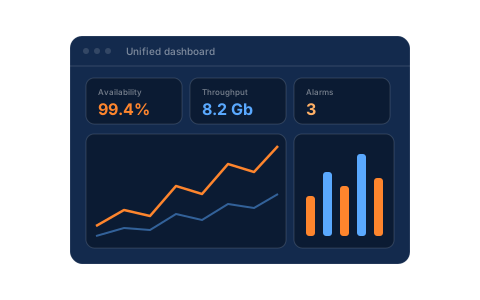
A multi-vendor OSS platform normalizes counters and alarms into one model, so a drop in throughput can be traced from the cell, through transport, to the core in minutes. SLA tracking, geo views and trend reports all draw on the same source of truth.
Adding intelligence on top
Once data is unified, AI/ML-based root cause analysis becomes practical. Patterns across vendors and domains surface automatically, helping teams move from reactive firefighting to proactive optimization.